
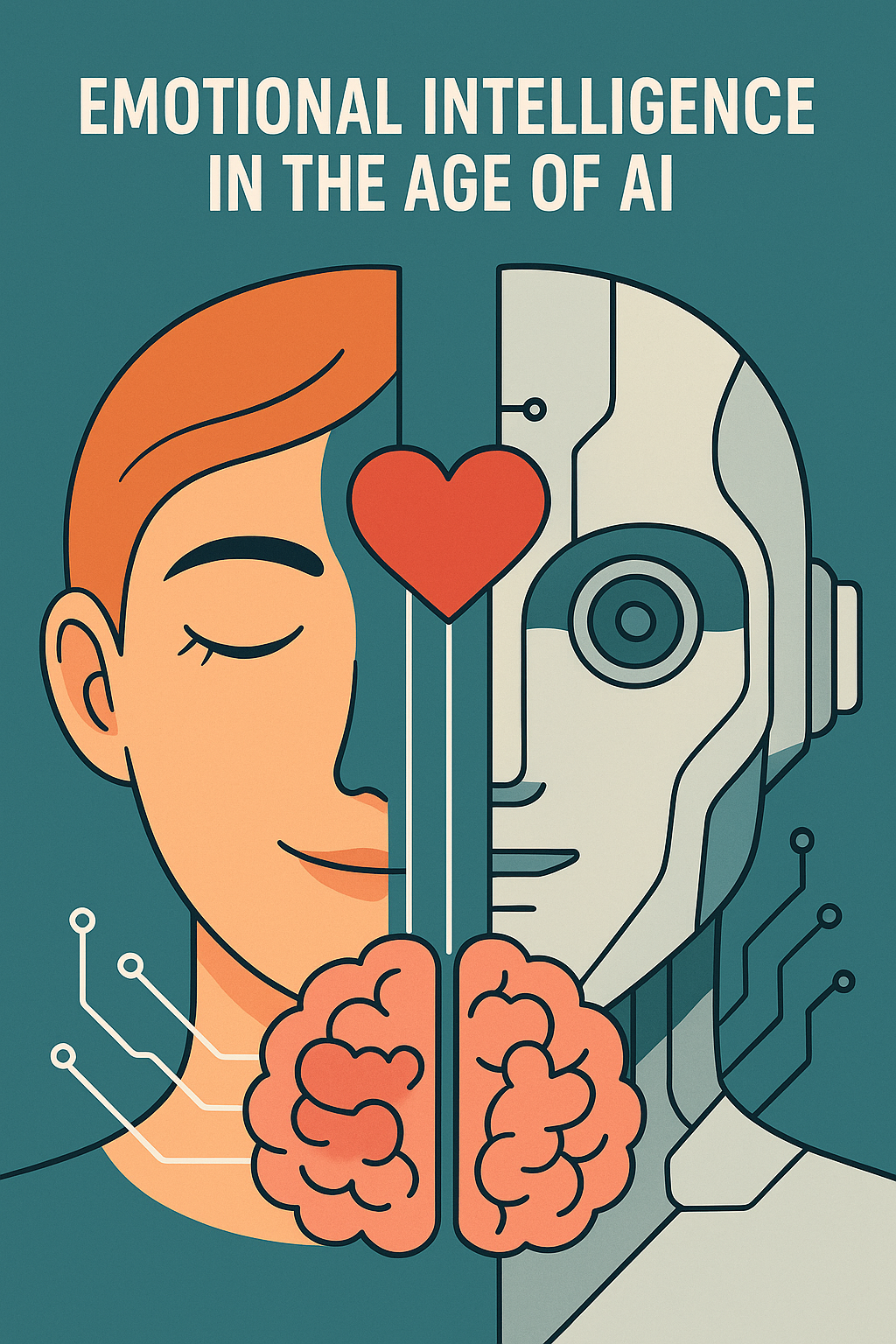
As artificial intelligence continues to redefine our professional and personal landscapes, one human skill stands out as irreplaceable: Emotional Intelligence (EI). Often described as the ability to understand and manage emotions, both yours and others’, emotional intelligence has become a cornerstone of effective leadership, collaboration, and innovation in the digital era.
In a world increasingly powered by algorithms, emotional intelligence is the human API, the critical layer connecting empathy with execution.
What Is Emotional Intelligence?
Coined by psychologists Peter Salovey and John Mayer, and popularized by Daniel Goleman, emotional intelligence refers to a person’s ability to:
- Recognize emotions (self-awareness)
- Regulate emotions (self-management)
- Motivate themselves (intrinsic drive)
- Empathize with others (social awareness)
- Navigate relationships effectively (relationship management)
These components together create a kind of emotional architecture that shapes how we think, act, and connect, especially in collaborative environments like technology and innovation.
How to Grow in Emotional Intelligence
Emotional intelligence is not fixed. Like machine learning models, it can be trained, refined, and improved with deliberate effort.
1️⃣ Cultivate Self-Awareness
Start by identifying emotional triggers. Use daily reflection or journaling to ask:
- What emotion did I feel most today?
- How did that emotion shape my decisions?
Pro Tip: Try apps like Moodnotes or Reflectly to track patterns and understand emotional trends.
2️⃣ Practice Emotional Regulation
When tension arises, pause before responding. Techniques like deep breathing, meditation, or even a quick walk can help reset your cognitive response system.
Think of it as emotional debugging. Before reacting, inspect the process causing the “error.”
3️⃣ Strengthen Empathy
Actively listen in conversations without planning your reply. Repeat back what you’ve heard to validate others’ emotions.
Empathy is a two-way data exchange: listening builds understanding, and understanding builds trust.
4️⃣ Master Communication
High-EI professionals communicate with precision and compassion. Learn to adjust your tone, pace, and body language based on the emotional climate of a meeting or team.
5️⃣ Build Emotional Resilience
Developing EI also means managing emotional fatigue. Practice boundary setting, gratitude journaling, and prioritizing rest to sustain long-term emotional stability.
Emotional Intelligence and Artificial Intelligence
Here’s where the conversation gets fascinating. Emotional intelligence is shaping artificial intelligence itself.
1️⃣ Affective Computing
AI models are increasingly designed to detect and respond to human emotions, from customer service chatbots that adapt to user frustration to healthcare AI that reads emotional tone in patient conversations.
2️⃣ EI as a Complement to AI
While AI handles data, humans handle context. Emotional intelligence bridges the interpretive gap between what data shows and what it means.
In hybrid teams, where humans collaborate with AI systems, those with high EI are better at:
- Managing trust between humans and algorithms
- Translating AI insights into human decisions
- Designing empathetic technology experiences
3️⃣ The Future: Emotionally Intelligent AI
We are moving toward AI that not only understands what we say but how we feel when saying it. Emotionally aware systems are already emerging in:
- Education: Adaptive tutoring systems that detect student frustration
- Healthcare: Voice-based diagnostics detecting emotional distress
- Customer Experience: Sentiment-aware chatbots and voice assistants
The emotional quotient (EQ) of AI will soon be a measure of its usability and ethical impact, making our emotional intelligence even more vital in its development.
What It Means to Have High Emotional Intelligence
Professionals with high EI:
- Stay calm under pressure
- Respond instead of reacting
- Inspire collaboration and trust
- Adapt communication across cultural and emotional contexts
- Balance technical logic with human intuition
In leadership, this balance becomes a strategic differentiator. As automation grows, organizations increasingly value emotional intelligence as a skill multiplier that enhances every other ability.
Practical Tips to Elevate Your EI Today
| Area | Action | Frequency |
|---|---|---|
| Self-Awareness | Reflect on one emotional moment per day | Daily |
| Self-Regulation | Use the “pause–breathe–respond” rule | In tense situations |
| Empathy | Ask one clarifying question in every meeting | Daily |
| Motivation | Write a short gratitude list | 3× a week |
| Relationship Management | Schedule time for honest feedback | Weekly |
Pro Tip: Treat feedback as emotional data, not criticism. Analyze it like metrics that can guide your personal improvement.
Learn More
If you would like to explore emotional intelligence and AI integration further:
- IBM SkillsBuild: Explorations into Mindfulness
In this course, learners develop an understanding of mindfulness concepts and techniques. They also learn how to further develop focus and self-awareness and how to apply mindfulness practices in various situations - LinkedIn Learning: Developing Your Emotional Intelligence
Emotional intelligence can help you build strong relationships at work and respond to change effectively. Psychologist and author Dr. Gemma Leigh Roberts explains what emotional intelligence (EQ) is and why it’s important. She helps you become more self-aware so that you can identify triggers that may hijack your performance. Gemma also helps you align your intentions and your impact so that you can build collaborative relationships. - Alison: Diploma in Emotional Intelligence
This free online diploma course will teach you how Emotional Intelligence (EI) skills impact your career. The emphasis is on the workplace, but the teaching can also be applied to your personal life. Would you like to learn how to combine your thinking with your feelings to build better relationships and make better decisions? Start learning how to use EI to develop your self-awareness, work with your emotions and manage stress today. - YouTube Talks:
Final Thoughts
In the end, emotional intelligence is not the opposite of intelligence; it is the amplifier of it.
As AI evolves, the ability to empathize, interpret, and connect emotionally becomes the competitive edge that machines cannot replicate. Cultivating EI is how we future-proof not just our careers but our humanity.
Because while machines may analyze data, only humans can turn it into understanding.